Beyond crowded malls, family safety extends to vehicles, shopping habits, and home security. Criminals often exploit holiday distractions, making these areas especially important.
A Story About the Importance of Home Safety
I want to share a story about something that every parent, grandparent, and caregiver needs to think about: what happens when you’re not home to protect the people you love most.
For us, it started with a simple plan. We told our kids that if they ever got home from school and nobody was there, they had to call us. But we didn’t stop there. We agreed on a special code. If they ever said, “Everything is A-OK,” that was our signal something was wrong—that there was an intruder in the house. Those three words would trigger our action plan: call the police, and get help moving right away.
We also prepared for the everyday scenarios that can quickly turn dangerous. If the kids were ever home alone and someone knocked on the door, the rule was simple: don’t answer it. Instead, get close enough to listen. Does the person say anything? Are they pretending to talk on the phone? Watch the doorknob. A stranger who is just checking to see if someone’s home will knock once or twice and leave. But someone looking to break in will test the doorknob or head around to the back of the house. That’s when the kids knew to call the police, immediately.
Now here’s the reality: families who don’t think about safety plans usually live in one of two worlds. The first is, “It won’t happen to me.” The second is, “If it ever does, I’ll be ready in the moment.” But neither is safe. By the time you’re trying to figure it out, it’s already too late.
I’ve always chosen a third world: a world where you pre-plan, practice, and respond with confidence.
One of Gordon Graham’s quotes has stuck with me my entire career: “If it can be predicted, it can be prevented.”
Living safely doesn’t mean living in fear or paranoia. It means being focused, being prepared, and giving your family the tools they need to act when you can’t be there.
That’s why this matters. And that’s why in our upcoming webinar, I’ll share more strategies to make sure your children and your elderly loved ones are not only protected, but empowered. Because safety isn’t about chance, it’s about choice.
Shopping and Vehicle Safety
Too many parents or caregivers 'hope' their children instead of actively 'guarding' them. Watching is passive, it assumes the child will stay nearby, no one will approach them or distract them. Guarding is proactive, it means staying close enough to intervene instantly, they are positioned right in front of you..
For example, in a crowded store, don’t have your child walk behind you. Instead, keep them walking in front of you so they remain in sight.
Recognizing Safe vs. Unsafe Interactions
Criminals often strike when people are distracted. Use these smart habits:
- Park in well-lit areas and always check your back seat.
- Keep hands free to react quickly, don’t overload yourself with bags.
- Secure wallets, purses, and gifts to avoid theft.
- Teach children to alert adults, not hide threats.
- If someone grabs them, encourage them to 'mark' the attacker by biting, scratching, or yelling loudly.
Home Safety During the Holidays
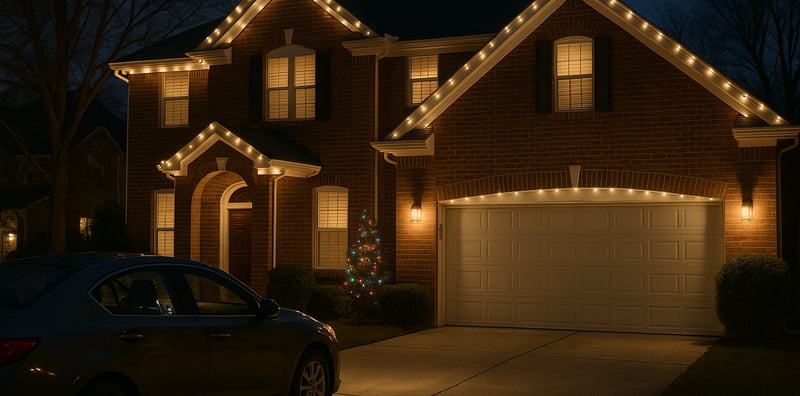
Burglary rates increase during the holiday season because homes are often full of valuables or left unattended. The FBI’s Uniform Crime Report highlights that property crime accounts for over 60% of reported crimes in the U.S. 1
Practical steps include:
- Lock all doors and windows, and close interior doors when leaving.
- Don’t post travel or gift details on social media.
- Use timers for lights if away.
- Check trash cans and property for packaging that reveals expensive items.
Holiday safety extends beyond the crowd, it includes vehicles and homes. By practicing simple habits, families can deter criminals and ensure peace of mind.
Give your family the gift of safety this season
Join our free Family Holiday Safety Webinar on December 17 at 11:00 a.m. CT to learn simple, effective ways to keep your loved ones protected during holiday events, travel, and crowded outings.

References:
- Federal Bureau of Investigation - FBI (2019). Crime in the United States.
https://ucr.fbi.gov/crime-in-the-u.s/2019/crime-in-the-u.s.-2019/topic-pages/property-crime