Key Takeaways
- The Joint Commission’s National Performance Goal #2a (effective January 2026) elevates workplace‑violence prevention to a National Performance Goal and consolidates existing requirements, including mandatory staff training, that have been in place since 2022.
- Hospitals are to provide workplace violence prevention training at hire, annually, and when there are changes such as job/role changes.
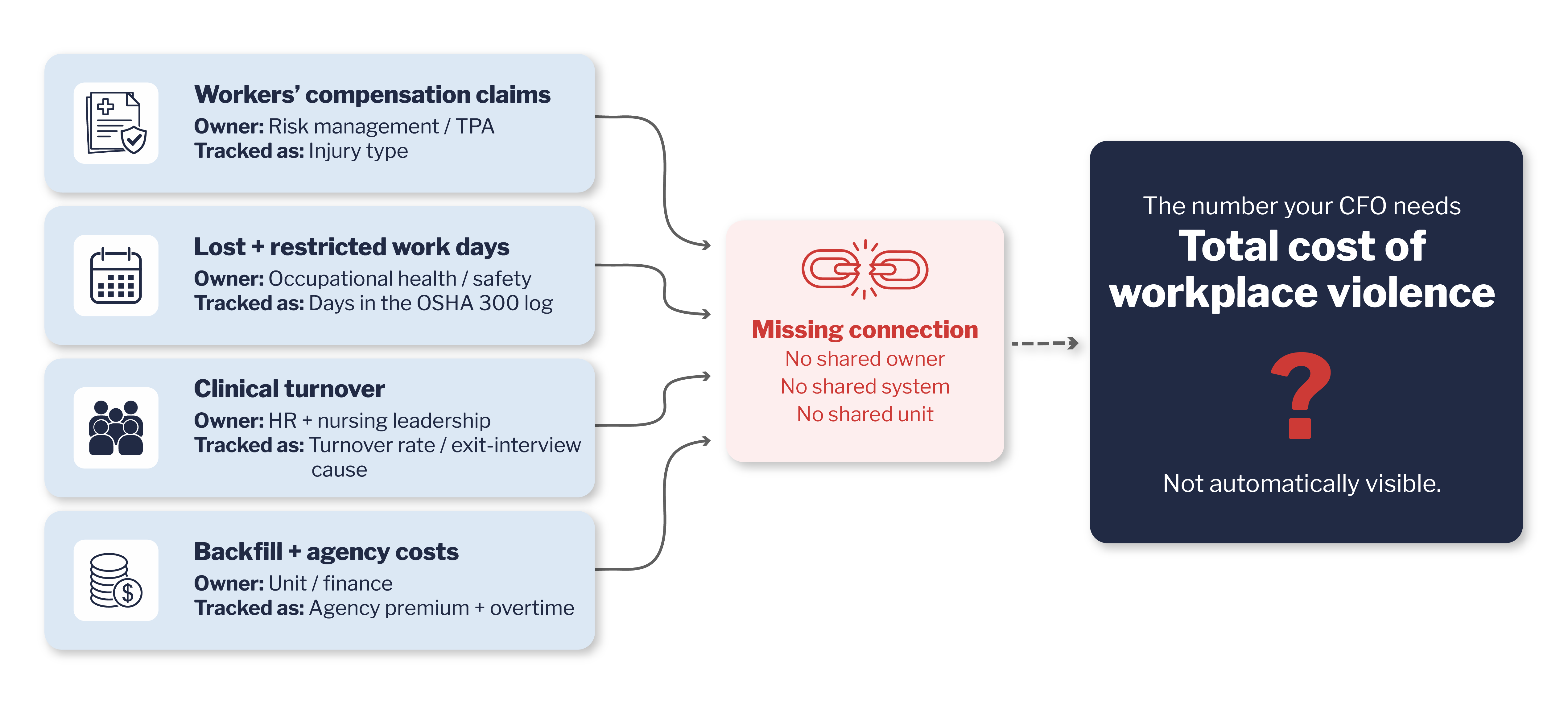
- Hospitals must have a workplace violence prevention program, designated leadership, a formal reporting and follow-up process, governing body oversight, and an annual worksite analysis.
For years, The Joint Commission emphasized the importance of workplace‑violence prevention. Beginning in 2022, these expectations became formal accreditation requirements. With the January 2026 release of National Performance Goal #2a, The Joint Commission has elevated workplace‑violence prevention to a national safety priority by consolidating and strengthening existing requirements.
For The Joint Commission accredited healthcare organizations who are without a formal workplace violence prevention infrastructure or a well-documented prevention program, the time to become compliant is now.
For Vistelar clients, this requirement validates that the investment they have already made meets and exceeds the standard’s expectations.
What is the 2026 NPG 2a?
National Performance Goal #2a is a Joint Commission requirement, effective January 2026, that strengthens and elevates existing workplace‑violence standards by requiring hospitals to maintain a comprehensive workplace‑violence prevention program with designated leadership, a defined reporting and follow‑up process, governing body oversight of workplace‑violence data and trends, and an annual worksite analysis that evaluates risks, policies, procedures, and training.
What Changed in January 2026, and Why Does it matter?
The Joint Commission has been strengthening workplace‑violence prevention requirements for several years. In 2022, it introduced new and revised consensus‑based standards that established a formal framework for workplace‑violence prevention across all accreditation programs, including leadership oversight, reporting systems, data analysis, post‑incident review, and staff training. Since then, hospitals have received more than 100 Requirements for Improvement (RFIs) related to these standards during survey activities. The data driving this continued elevation are significant: OSHA reports that healthcare workers are four to five times more likely to experience workplace violence injuries than workers in private industry overall, and the rate of nonfatal injuries from intentional harm in healthcare increased from 10.4 to 15.2 per 10,000 full‑time workers between 2018 and 2020. The Joint Commission also uses a broad definition of workplace violence that includes not only physical assaults but also verbal aggression, intimidation, harassment, bullying, sabotage, and other threatening behaviors.
With the January 2026 release of National Performance Goal #2a, the Joint Commission formalizes and elevates these expectations by organizing them into a high‑priority national safety goal. NPG 2a requires hospitals to take a comprehensive, proactive, and well‑documented approach to preventing all forms of workplace violence, reinforcing that these expectations are not new, but now carry heightened visibility, accountability, and organizational priority.
What Changed in January 2026, and Why Does it matter?
To meet NPG 2a, accredited hospitals must now demonstrate a comprehensive workplace violence-prevention program that includes:
- Designated leadership and a multidisciplinary team
- Documented training on workplace violence prevention provided at hire, annually, and when program changes occur
- A formal process for reporting, investigating, and following up on workplace violence incidents
- Regular reporting to the governing body on workplace violence data and trends
- Organize and elevate existing 2022 requirements and workplace‑violence program expectations, including leadership oversight, reporting processes, training, and worksite analysis
The NPG framework emphasizes clear, measurable expectations, which aligns with describing these elements as “specific, surveyable requirements.”
Will a Basic Training Handout Satisfy the Standard?
No. Three dimensions of NPG 2a meaningfully elevate expectations for accredited hospitals:
- Frequency and triggers - Training must be provided at the time of hire and regularly thereafter, including when changes occur in the workplace‑violence prevention program. A one‑time all‑staff event is insufficient. Hospitals need a sustainable training infrastructure that reliably delivers required content on an ongoing basis.
- Documentation - The required annual worksite analysis obligates hospitals to maintain written evidence of their workplace‑violence prevention program, including policies, procedures, training records, incident‑reporting processes, and actions taken to mitigate identified risks.
- Scope - The Joint Commission defines workplace violence broadly to include verbal, nonverbal, written, or physical aggression; intimidation; harassment; bullying; sabotage; sexual harassment; physical assaults; and other behaviors of concern. Training and prevention strategies must address this full spectrum, not only physical violence.
Vistelar’s Framework Maps to This New Joint Commission Standard
Vistelar’s approach was built for exactly this kind of structured, comprehensive requirement. Here is how our offerings map directly to what NPG 2a demands:
- Continuous training support at hiring, annually, and at role changes: Vistelar offers initial training programs for onboarding and role transitions and train-the-trainer which provides scalable annual reinforcement modules that meet documentation requirements without pulling staff away from patient care.
- Cross-disciplinary program reach: Vistelar training gives staff at every level and across every department a shared language for recognizing and managing conflict, supporting the multidisciplinary team structure the standard requires.
- Coverage of the full definition of violence: Our curriculum addresses the complete spectrum of workplace violence and conflict management, from prevention to verbal escalation and intimidation to physical threat response.
- A proactive culture that reduces incidents at the source: Beyond meeting the training checkbox, Vistelar’s framework builds the situational awareness and early-intervention habits that reduce how often reporting and response protocols ever need to be used.
Guidance for Designated Leaders of Workplace Violence Prevention Programs
A Roadmap for Building Out the Program or Strengthening the Program You Already Have
If you are the person responsible for building or overseeing this program in your organization, whether that is a chief nursing officer, a director of safety, a risk manager, or a frontline leader tapped to lead the effort, the NPG 2a provides clear definition and expectations for the program in your organization.
Building this takes more than good intentions. It takes the right training partner, a scalable delivery model, and a framework that changes how people think and act under pressure. Here is what a program that meets the standard and holds up under scrutiny looks like in practice:
- A documented training curriculum covering all staff at hire, annually, and at role transitions, with records to prove it
- A clear reporting and investigation process that staff know how to use and feel safe using
- Workplace violence data reviewed at the governing body level, with trends tracked and acted on over time
- An annual worksite analysis that honestly examines gaps and drives continuous improvement
Consider using this opportunity to go above merely meeting the standards.
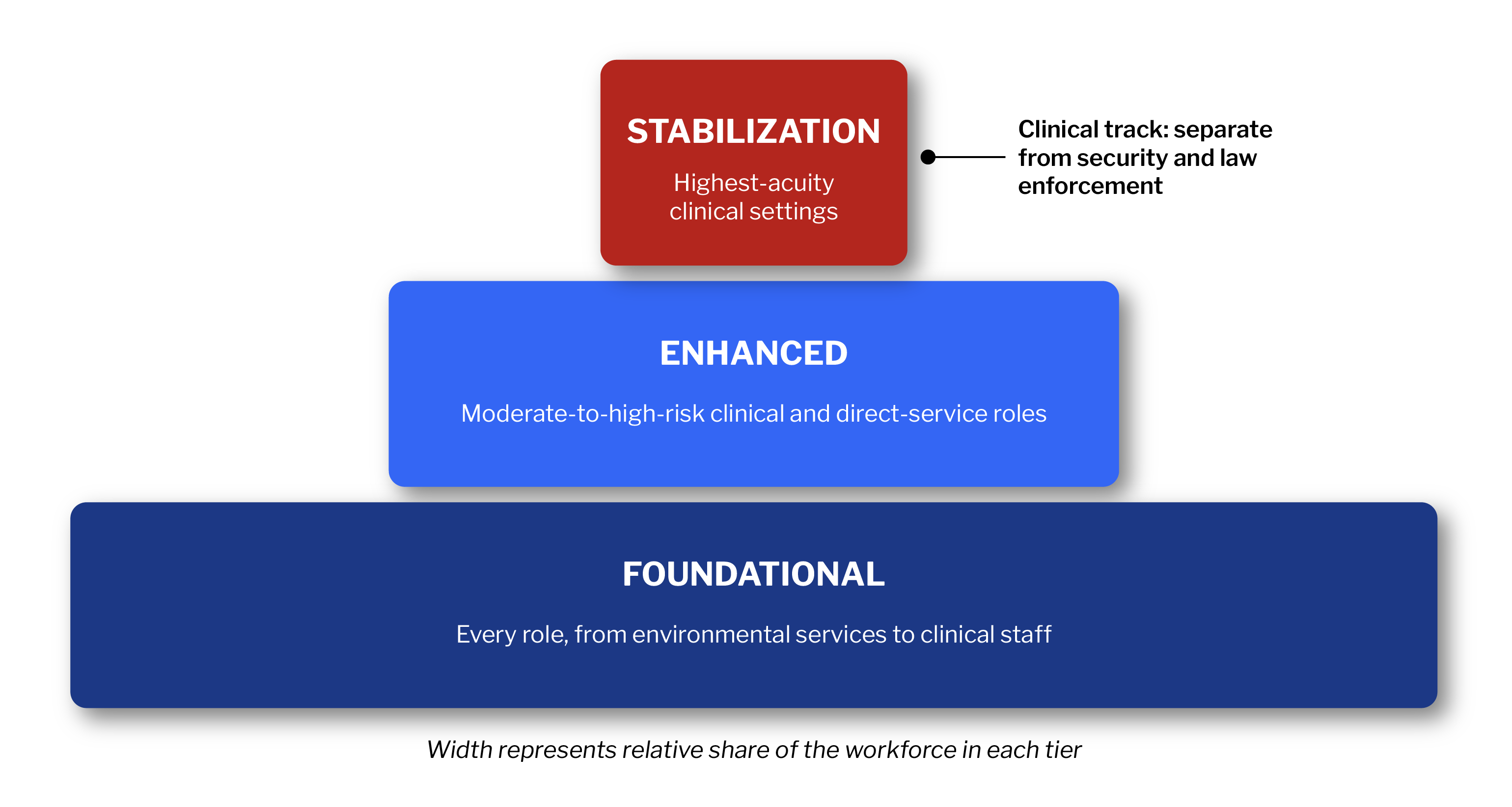
Work with a partner like Vistelar to train all risk-tiers, from early conflict prevention to physical intervention.
Get Assistance Strengthening Your Training Approach
Whether you are building your workplace violence prevention training from scratch or enhancing an existing program, our team can help you identify training approaches that support your staff and align with current expectations in healthcare.
A no-obligation conversation can help you explore training options, ask questions about implementation, and determine whether healthcare-focused training that surpasses the minimum standard would be the right fit for your organization.
Please note that Vistelar provides training solutions and education. We do not provide consulting on regulatory compliance programs, data analytics, or internal policy development.