
Workplace Violence Prevention in Healthcare:
Non-Escalation and De-Escalation
De-escalation is half the answer. Here is the other half, what the research actually supports, and what a two-year university study of our own program taught us.
By Casey Goldschmidt, CEM | Chief Operating Officer, Vistelar
De-escalation is the term most healthcare organizations already train for, budget for, and cite in their accreditation documentation. American hospitals spend roughly $377 million a year on it. It is also, by itself, half the answer.
Ask most workplace violence committees what their program covers and you get a confident answer about de-escalation. Ask what happens in the ninety seconds before a situation reaches the point where de-escalation is needed, and the answer gets quiet. That gap is not a training gap. It is a design gap, and it is why organizations doing everything else right keep seeing the same incidents recur.

The first person to meet a frustrated visitor is usually not clinical.
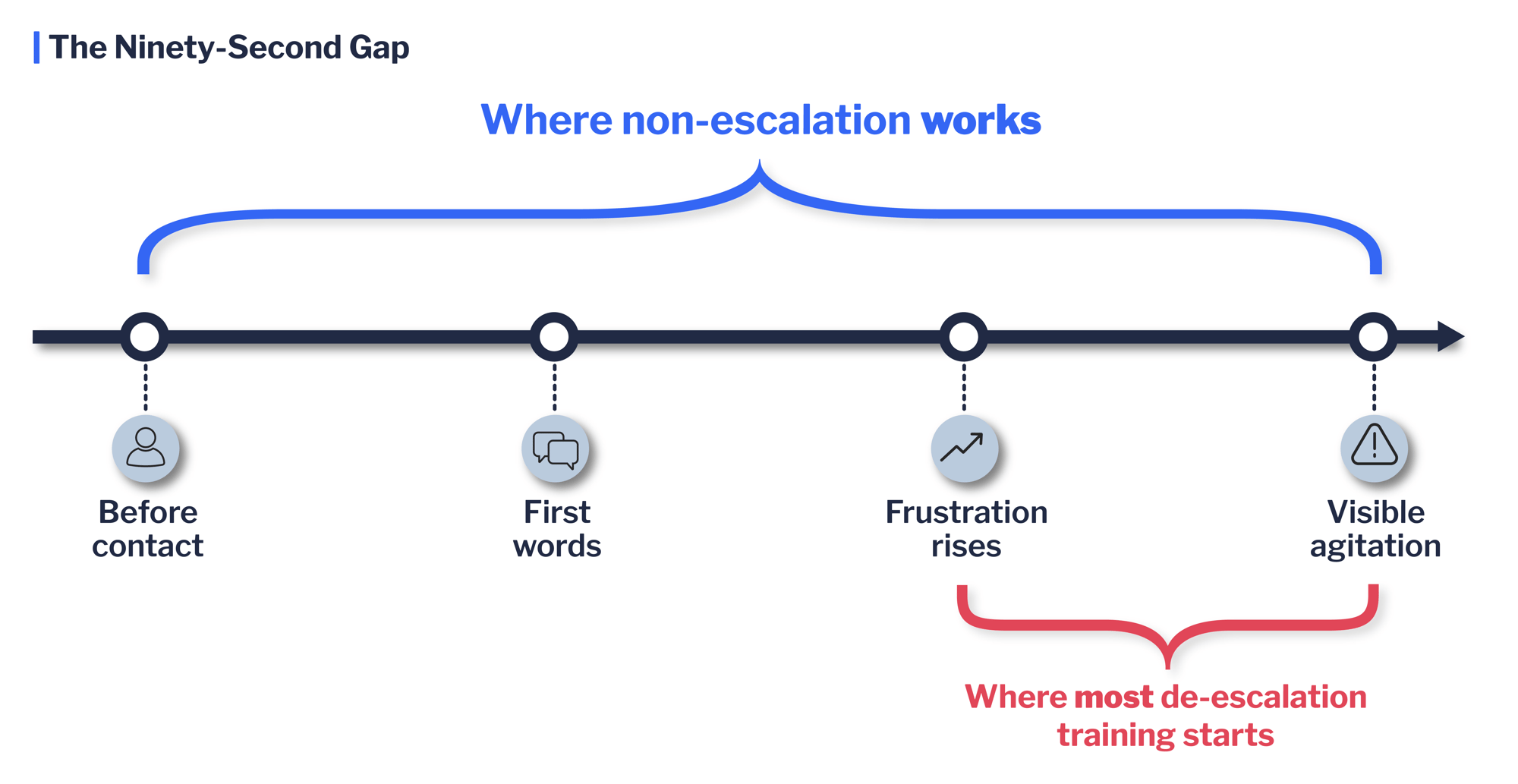
I have watched it from both ends of the organizational chart. My career began in frontline healthcare security before moving into enterprise leadership, including running workplace violence strategy for Ascension. From the floor, the gap looks like a nurse who was never taught what to do in the moments before a patient's frustration becomes a threat. From the executive suite, it looks like a training line item that satisfies a survey question without moving an incident rate. Both describe the same missing piece: non-escalation.
This guide covers what non-escalation is and why it is a distinct discipline rather than a gentler synonym for de-escalation. What de-escalation research actually supports. Where generic skills reliably fail and why. What a two-year university study of our own program taught us. Which risk-assessment tools have been validated outside psychiatry. And how to tell whether a program is working before the financial numbers catch up.
Top Takeaways
- Non-escalation and de-escalation are different disciplines aimed at different moments. Non-escalation prevents a situation from reaching the point where de-escalation is required. Most de-escalation training starts the clock after agitation has already appeared.
- The evidence for de-escalation training alone is weaker than the industry admits. A Cochrane review of nine controlled studies found that such training in isolation may not reduce aggression toward healthcare workers. The evidence supports instruction combined with active practice and organization-wide programs.
- Escalation is not a staircase. A patient can arrive at any level of severity directly. Assuming sequential stages produces staff who look for the missing step instead of responding to what is in front of them.
- Some of what gets logged as patient aggression is not aggression in any useful sense. It is an unmet need that escalated. That is an operations problem, and fixing it requires no training at all.
- A person in crisis cannot enter the verbal contract that standard de-escalation depends on. There is no need to diagnose why. The skills that work address the underlying sensitivity, whatever produced it.
- Physical intervention training for clinical staff and for security are two different programs. Putting an ED nurse and a security officer in the same tier blurs a distinction that matters clinically and legally.
Jump To A Section
- What non-escalation is, and why the distinction matters
- The numbers worth using, and what each actually measures
- Four types of violence, one skill set
- What the evidence actually supports
- What a two-year study of our own program taught us
- The framework: six phases, two zones
- Why cause does not change the skill
- Which risk-assessment tool works where
- Which staff need which tier
- How to tell whether it is working
- FAQs
Non-escalation is the work that keeps a situation from ever needing de-escalation. It begins before you enter the room, and it runs through how you open the conversation, how you explain a delay, how you set a limit without stripping someone's dignity, and how you close.
De-escalation is the later and different skill. It is reducing already-built tension and returning an interaction that has already escalated to a calmer state.
The distinction decides where the money goes
The distinction is not semantic. It determines where a program spends its money. If de-escalation is the whole program, every dollar goes toward performing well in the worst moments. If non-escalation exists as a discipline in its own right, some of that money goes toward having fewer of those moments.
The people already doing it are not on the safety org chart
Here is the operational consequence. A receptionist who proactively updates a patient who has been waiting three hours is doing violence prevention. So is a unit secretary who reads a family member's rising frustration and adjusts before anyone raises a voice. Neither is on any organizational chart as a safety role, and neither activity appears in any incident log, because the defining feature of successful non-escalation is that nothing happens.
Which is also why it often gets no defined budget.
"You cannot count the incidents that did not occur."
We have published a fuller treatment of this terminology separately at this link. The rest of this article is about why that distinction should change how a program is built.
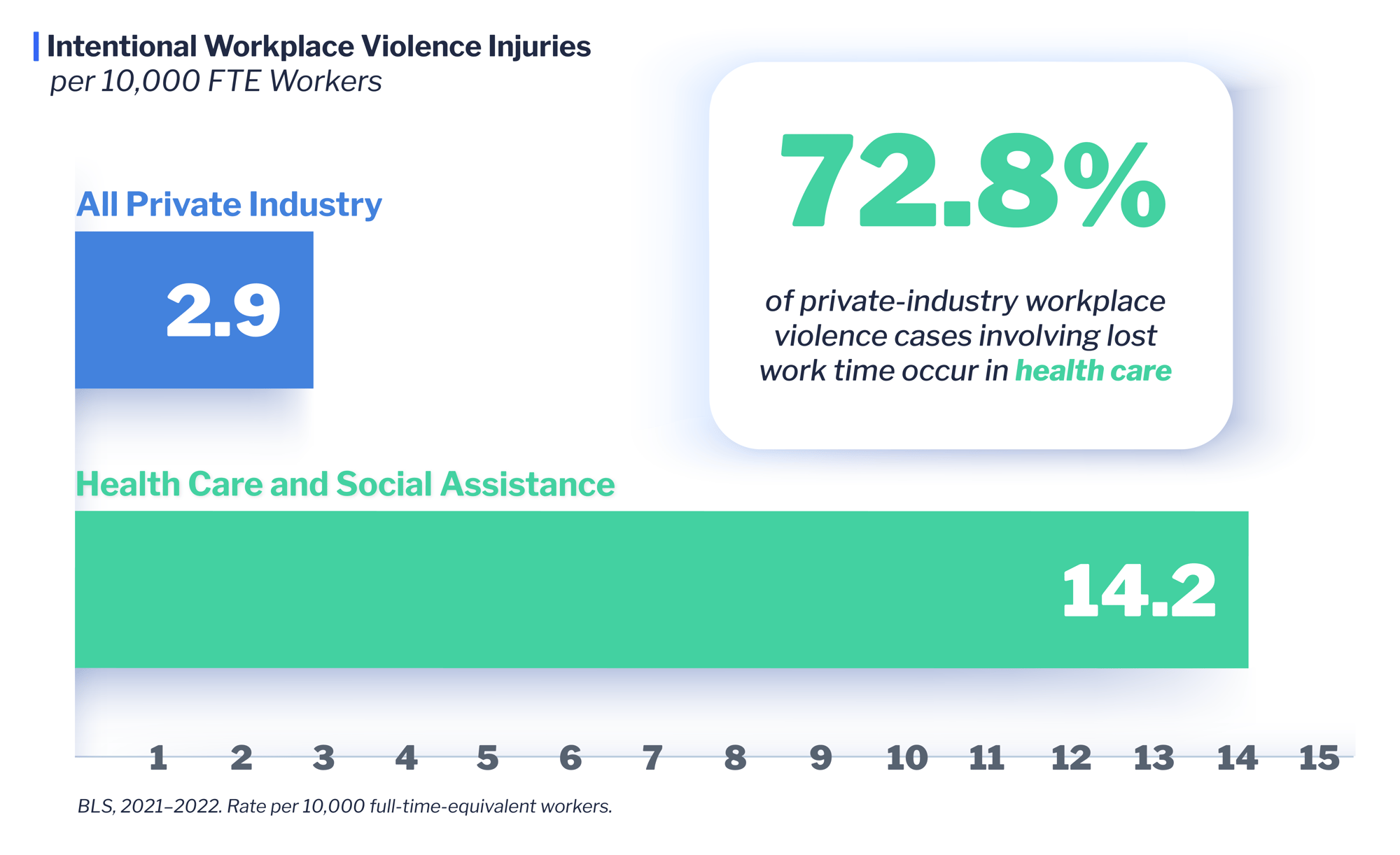
Nearly three-quarters of American workplace violence serious enough to cost work time happens in one industry. This is employer-recorded injury data, not a survey.
The Bureau of Labor Statistics (BLS) recorded intentional injury by another person at 14.2 per 10,000 full-time equivalent workers in health care and social assistance, against 2.9 across all private industry, roughly five times the rate, using 2021–2022 data. Health care and social assistance accounted for 72.8% of all private-industry nonfatal workplace violence cases severe enough to cost work time. That last figure is probably the strongest because it is neither a survey nor self-reported. It is employer-recorded injury data, and it means nearly three-quarters of American workplace violence with lost time happens in the healthcare industry.
Note what it excludes. BLS counts cases resulting in days away, restricted duty, or transfer. Everything below that threshold, which is the great majority of incidents, is invisible to it. It is a floor, not a prevalence estimate.
For prevalence, National Nurses United's 2025–2026 survey of 1,267 registered nurses found 84.8% experienced at least one type of workplace violence in the past year, with 70.3% verbally threatened. It is a convenience sample of union members rather than a nationally representative one.
What it costs after the incident
Two figures speak to what happens after. Press Ganey's analysis of hospital-reported nursing data found assaults on nursing personnel rose from just over 14,000 in 2019 to nearly 24,000 in 2023. And in a 2020 survey of 814 emergency department staff across 18 hospitals in one health system, 21.3% of those who had experienced workplace violence reported symptoms consistent with post-traumatic stress, while 47.6% said it had altered how they interacted with patients.
That last number indicates that violence not only injures staff; it also changes clinical behavior, in a negative direction nobody chose and nobody is measuring.
Criminal Intent
No legitimate relationship to the organization; violence accompanies another crime
Personal Relationship
A relationship outside the workplace that follows the employee into the hospital
Client-on-Worker
Patients, their family members, visitors
Worker-on-Worker
Lateral violence, including bullying and verbal abuse between staff
Client-on-Worker dominates in healthcare, and that is what makes the setting distinctive. In ACEP's 2022 poll of 2,712 emergency physicians, 98% of assaults were committed by patients and 31% involved patients' family or friends. No federal agency publishes a precise share of healthcare violence attributable to Client-on-Worker, but the direction is not disputed.
In most industries, the person who assaults an employee is a stranger or a colleague. In healthcare, it is usually the person the employee is trying to help, who is frequently not in full control of their behavior and who cannot be removed from the building. Security models imported from retail or banking assume none of those things, which is why they underperform here, and it is why clinical staff, not only security staff, need conflict management capability.
The type of violence tells you who you are dealing with and why. It does not change the skills.
"Behavior is behavior. What differs between a frightened patient, an angry visitor, and a hostile coworker is the scenario, not the response."
This guide draws its examples from Client-on-Worker Workplace Violence Type because that is where the volume is in healthcare, but nothing in the framework that follows is specific to it.
Training alone
NOT SUPPORTED
RAND 2019 and Cochrane 2020: Nine controlled studies, 1,688 healthcare workers. Certainty low to very low.
Organizational programs
MODEST SUPPORT
Cochrane 2020 Companion review. Strongest signal from structured risk assessment.
Instruction plus practice
SUPPORTED
Academic Medicine 2026: 56 studies. Every strong-evidence intervention combined teaching with role-play or simulation
On whether de-escalation training reduces violence
RAND conducted a rapid evidence assessment for the UK's National Health Service (NHS) Improvement in 2019 and found that training "may help staff to manage patient violence and aggression" and "de-escalation training may not in itself reduce the number of violent or aggressive incidents." Its fourth conclusion is the most important one: "a comprehensive approach to managing violence in the NHS may be more effective than de-escalation training alone." That is one of the reasons non-escalation training matters so much.
On training generally
A 2020 Cochrane review by Geoffrion and colleagues pooled nine controlled studies covering 1,688 healthcare workers and concluded that "education combined with training may not have an effect on workplace aggression directed toward healthcare workers," even though education and training may increase personal knowledge and positive attitudes. Certainty under the GRADE system, which rates how much confidence to place in a body of evidence, ranged from low to very low on every outcome. The reviewers also noted that training did not reduce aggressive incidents and may have increased their reporting.
On organizational interventions
A companion Cochrane review that same year found very low- to low-quality evidence that organizational interventions may reduce aggression. The strongest single signal came from structured risk assessment in psychiatric settings (RR 0.36, 95% CI 0.16–0.78, very low certainty). Multicomponent interventions showed no clear effect (OR 0.85, 95% CI 0.63–1.15).
On the best trial available
The strongest study is a 2017 randomized controlled trial by Arnetz and colleagues across 41 units in seven hospitals. Units randomized to the intervention saw roughly 50% lower violent event rates at six months and roughly 60% lower violence-related injury rates at 24 months. The authors are candid that violence rose sector-wide during the study, so this is a slower rate of increase rather than an absolute decline.
Note what the intervention actually was. Not a curriculum. Each unit received its own violence data plus a prevention checklist, and each unit built its own action plan.
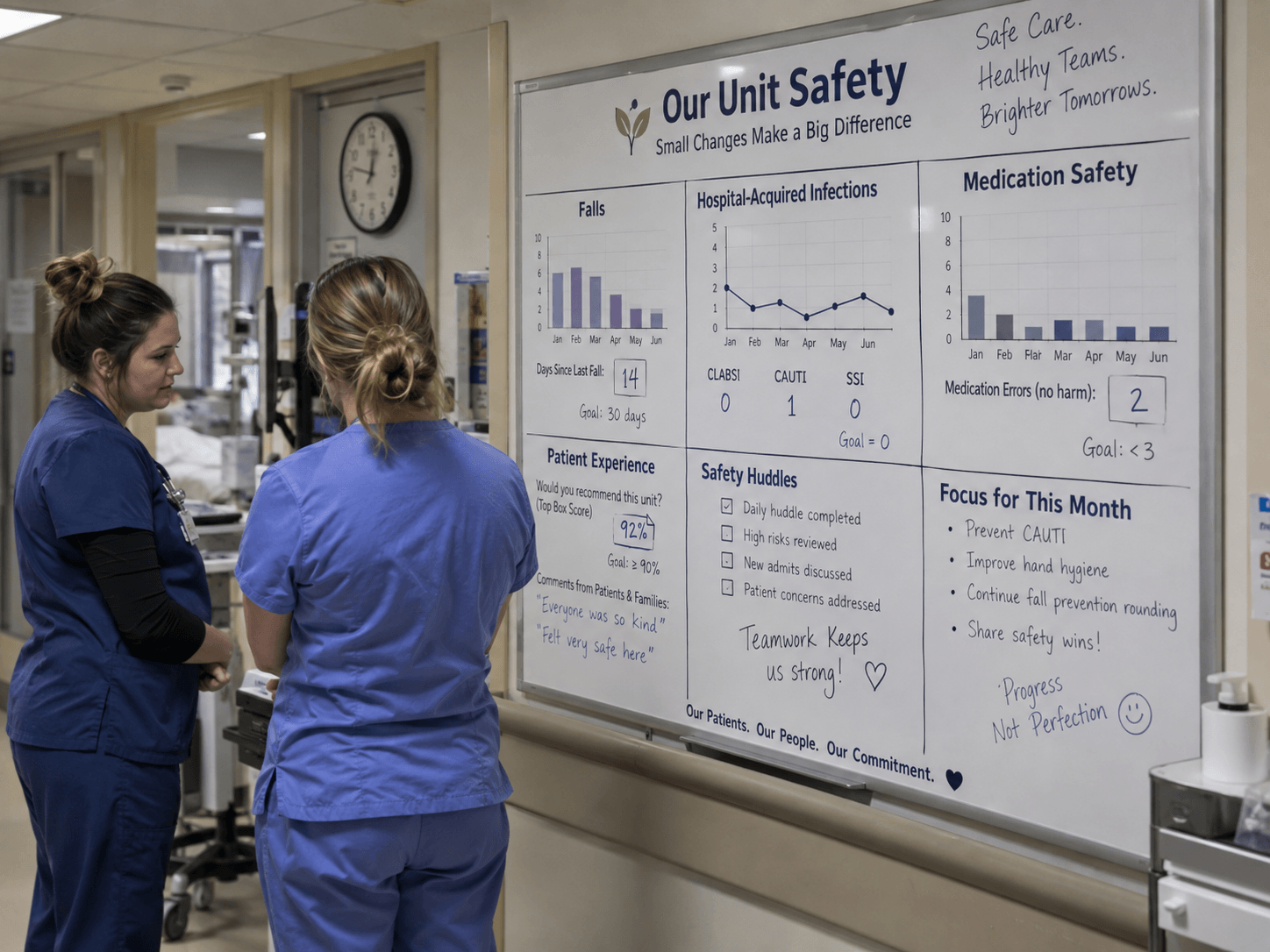
In the strongest trial in the field, what moved the numbers was each unit owning its own data.
On how to teach it
The most useful recent finding concerns pedagogy. A 2026 systematic review in Academic Medicine screened 4,312 records and included 56 studies of verbal de-escalation teaching. Only 12 reached the top tiers of the strength-of-evidence scale, and the central result is that "the interventions with strong evidence all incorporated both didactic education as well as role-play and/or simulation for active practice."
Three conclusions follow
Content delivery is not an intervention. If a workplace violence program is a module people click through or a class people attend, the best evidence predicts it will improve knowledge and attitudes but will not change incident rates. The active ingredient is practice under pressure.
Training alone is not a program. RAND and Arnetz point in the same direction. The results showed up where the organization acted, not where individuals were taught. In the Arnetz trial, what moved the numbers was giving each unit its own violence data, making that unit responsible for building its own plan, and then fixing what the plan identified. Training was part of it. It was not the part doing the work. That is not an argument for less training. It is an argument against buying training and calling it a program.
Your own measurement matters more than the literature. RAND's closing recommendation was that future implementations "would benefit from the inclusion of evaluation in their design." The field is under-evidenced. Any organization that builds measurement in from the start will know more about its own program than the published literature does about anyone else's.
One of our clients did exactly that, and it caused us to change the way we do business.
Milwaukee County Behavioral Health Division, a public behavioral health system, brought in Vistelar to train its entire staff. MCBHD separately partnered with the University of Wisconsin–Milwaukee to evaluate whether the training met its goals, and followed the results for two years. The work was done by Dr. Tina Freiburger and Dr. Danielle Romain Dagenhardt of the university's Department of Criminal Justice and Criminology. MCBHD commissioned and funded the evaluation. Vistelar did not commission it, did not conduct it, and did not control its findings.
Employees were surveyed at four points: before training, one month after, one year after, and two years after, with focus groups alongside.
The survey results were published, peer-reviewed, in the International Journal of Conflict Management. Both of the underlying technical reports are public, and all three are linked at the end of this article.
One result from the study is that the initial measured gain in conflict management skills faded over time. It rose sharply at one month, was marginal at one year, and at two years was no longer statistically distinguishable from where it started.
However, over those same two years, staff kept using the skills. Between 82 and 100 percent of direct-care respondents reported still using each one, and usage held steady across the whole period. They had not forgotten the training and had not rejected it. They were using it, and the measured gain decayed anyway.
Usage is not proficiency, and attendance is not capability. A skill practiced casually and never rehearsed under pressure does not stay where it was on the day it was taught.
It was this result, along with other feedback we received from our customers, that caused us to shift from a traditional training approach (packaged curriculum, train-the-trainer training, and a workbook purchase requirement) to a content licensing approach (flexible curriculum, partnership relationship, courseware delivered in digital form, and a focus on sustainment).
The staff had already said what they needed. Asked what would improve the program, nearly every focus group participant raised the same thing: refreshers, or structured time on shift to plan and debrief.
One asked the question this entire article is trying to answer. "How do we make sure after this training what you learned doesn’t just fizzle out?"
One note on limits. The evaluation had no control group and relied on self-reporting, and by the two-year mark, 99 of the original 447 participants were still responding. The full findings, favorable and unfavorable, are in the reports linked at the end of this article.
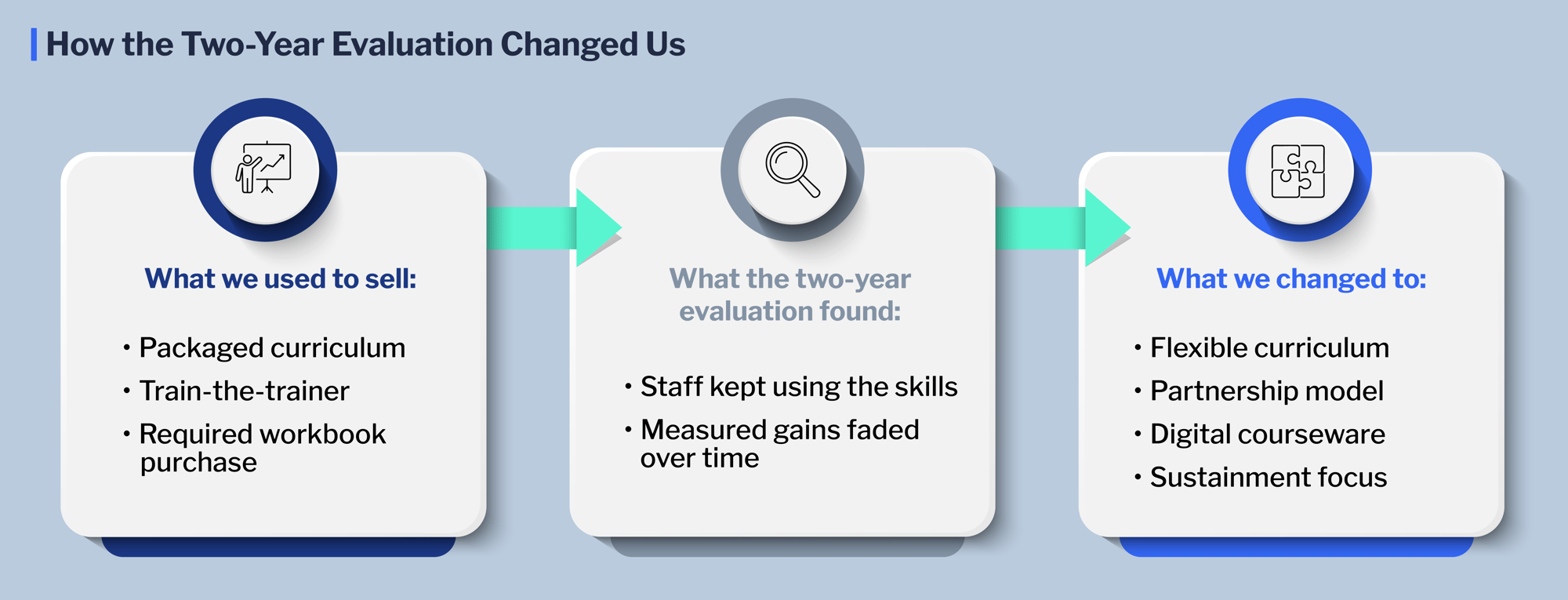
Our client commissioned an independent evaluation of our training; it told us something we did not want to hear, and we changed the business because of it.
"It was this result that caused us to shift from a traditional training approach to a content licensing approach."
Considering all of the above, Vistelar has organized its non-escalation and de-escalation program around the 6 Cs of Conflict Management: Context, Contact, Conflict, Crisis, Critical, and Closure.
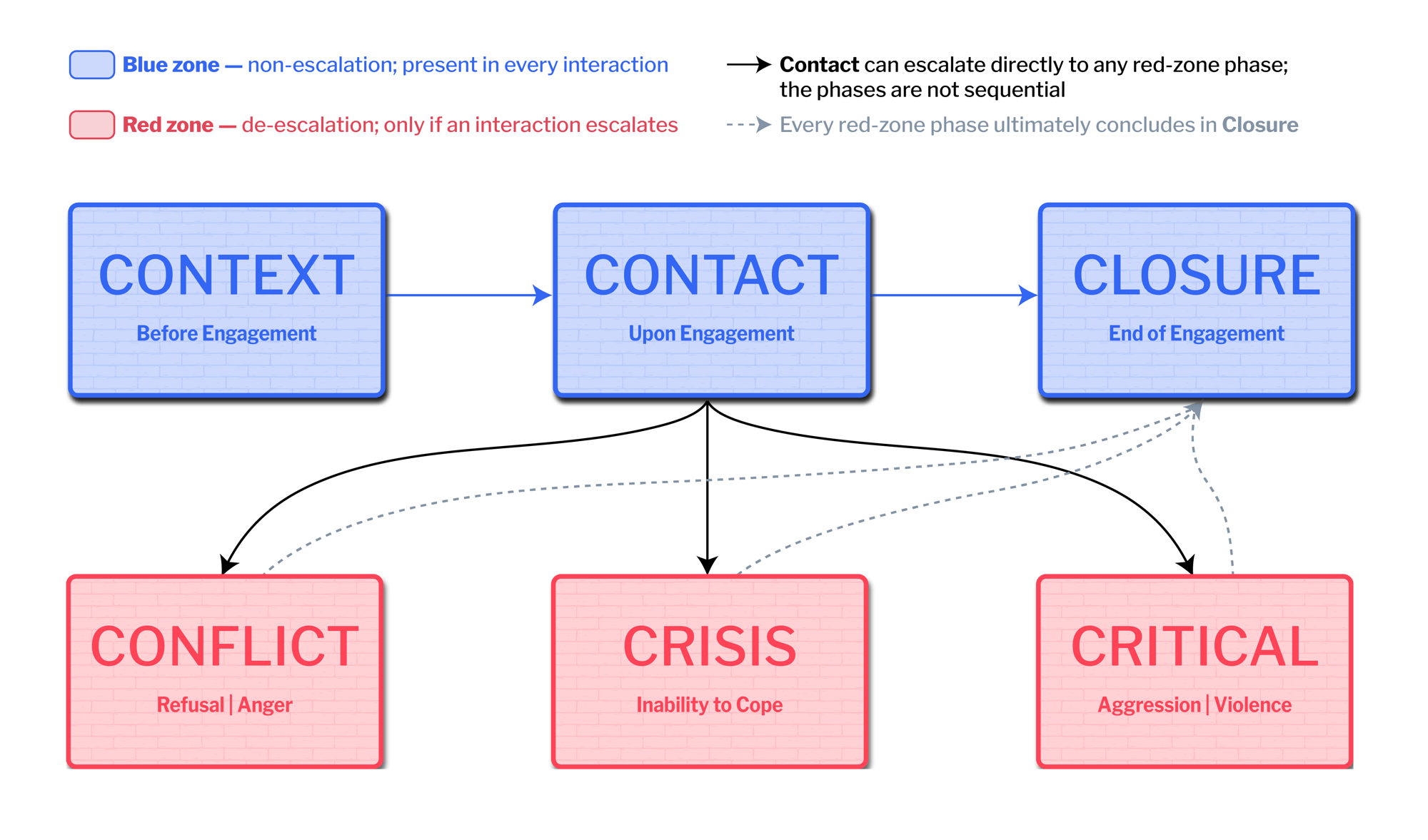
Three phases happen in every interaction. Three more only happen when someone takes you there, and they can be reached in any order.
This framework has two zones, and non-escalation is one of them rather than an isolated technique. Three of the six phases describe what happens in every interaction: the preparation before engagement, the engagement itself, and how the engagement ends. Those three are the blue zone, and collectively they define non-escalation. The other three describe what an interaction can escalate into: refusal and anger, an inability to cope, and physical harm. Those are the red zone, and collectively define de-escalation.
Earlier I said de-escalation training is, by itself, half the answer. The 6 Cs framework makes the point plainly. The other half, and the more important one, is non-escalation.
The red zone is not a progression
An interaction does not have to pass through refusal to reach crisis, or through crisis to reach violence. It can arrive anywhere directly. A patient in crisis does not begin by declining a request and work upward. A family member who has just been told his mother died can go from composed to dangerous in one sentence.
Closure is not what happens after violence
Note that the phase describing how an interaction ends sits in the blue zone, not at the end of the red one. It is how every interaction concludes, including the overwhelming majority that never escalate at all, and how one ends determines where the next one starts.
The skills that apply to each phase
Since the 6 Cs cover both non-escalation and de-escalation, it is useful to review the conflict management skills that apply to each C.
Context: before engagement. This is the preparation phase of an interaction, during which approach considerations are used to prevent conflict and enhance safety before the interaction even starts. What a caregiver does during this phase is the most important element of non-escalation. The primary Vistelar skills used during this phase include Treat With Dignity By Showing Respect; the practice of Empathy; situational awareness and planned response under Be Alert & Decisive; the discipline of governing your own reaction under Respond, Don't React; and deliberate preparation immediately before an interaction under Showtime Mindset.
Two principles of this phase are sometimes viewed as counterintuitive and are foundational to the rest of Vistelar's conflict management skills.
The first: showing respect does not require respecting. Respect is earned and rests on your values. Showing respect is a professional behavior you perform regardless, because it works. That distinction is what makes the principle usable by a nurse in hour eleven of a twelve-hour shift dealing with someone who has just insulted her. She is not being asked to feel anything; she is being asked to use the skill.
The second: empathy without action is not empathy. It is an intention. The measurable part of empathy is what you actually do differently.
Contact: upon engagement. This is the phase of an interaction when verbal communication begins, during which engagement considerations are used to prevent escalation. The Vistelar skills used during this phase include the Universal Greeting; the use of distance, positioning, hand placement and movement, called 10-5-2 Proxemics; assuming and accommodating impaired processing under Cognitive Challenge Alertness; and two tiers of listening, Active Listening and Beyond Active Listening.
The principle underlying this phase is that much of the escalation is caused by the responder rather than the patient. Interactions fail because we stand too close, talk too loudly, talk too fast, say too much, and touch too soon. None of those are patient behaviors. All of them are correctable, and correcting them requires no negotiation with anyone.
Closure: end of engagement. This is the ending phase of an interaction, during which future considerations are used to achieve the best outcome and set the stage for future contacts. The Vistelar skills used during this phase include a deliberate concluding statement, structured reflection through Debriefing, documentation through Reporting, and Self-Compassion for the person who absorbed the incident.
One principle of this phase is that incident documentation improves when conclusions are replaced with observations. "Became aggressive and hostile" is a conclusion a surveyor or an attorney can dispute. "Raised their voice and stepped closer" is an observation nobody can.
Conflict: refusal and anger. This is the phase of an interaction when a situation escalates, during which Persuasion and Redirection are used to shift the interaction back to the blue zone. Two principles of this phase are that repetition escalates, and that angry people are often overwhelmed and struggle to respond to reason.
Also, one of the most common failure modes in healthcare is neither fighting nor freezing. It is fawning: appeasing the aggressor through conflict avoidance, over-apologizing, and an inability to maintain boundaries. It presents as excellent customer service, and it never appears in an incident log. Staff who fawn are not de-escalating. They are conceding and teaching the unit's most difficult patients exactly which behavior produces results.
Crisis: inability to cope. This is the phase of an interaction when circumstances exceed a person's coping skills, during which Crisis Management skills are used to maintain safety and facilitate recovery. A principle of this phase is that people in crisis are often overwhelmed by crowds, sounds, and light, and are slow to process information. Caregivers should therefore reduce what the person has to process and meet the need driving the behavior.
Critical: physical harm. This is the phase of an interaction in which aggression or violence occurs and is causing, or is at immediate risk of causing, injury. The sole goal during this phase is physical safety. The core principle of this phase is that physical interaction is a very last resort. Vistelar's training focuses on knowing your options and having a planned response, such as contacting help, disengaging, and exiting.
A regulatory note that applies throughout. Any physical intervention in a hospital sits inside CMS's Conditions of Participation on restraint and seclusion at 42 CFR 482.13(e)–(f) and the corresponding Joint Commission requirements, which permit restraint or seclusion only where less restrictive interventions have proven ineffective, with an order, monitoring, time limits, documentation and defined reporting. Have your own counsel confirm how those requirements apply in your settings. If your program also has to satisfy a surveyor, here is what changed under Joint Commission's National Performance Goal for workplace violence prevention, effective January 2026.
The canonical modern reference on verbal de-escalation is the American Association for Emergency Psychiatry's Project BETA consensus statement about the Ten Domains of De-escalation. That statement is deliberately universal, and it provides essentially no condition-specific modification. It does acknowledge the boundary, noting that there are patients "who cannot be effectively engaged and verbally de-escalated."
This leaves clinical staff to work out the modifications themselves, usually during the event. That is why Vistelar emphasizes that a heightened reaction to external stimuli, which can produce conflict and crisis.
Common reasons that cause conflict and crisis:
-
tragic events and circumstances
-
mental illness
-
physical illness, injuries, or pain
-
neurocognitive disorders
-
neurodevelopmental disorders
-
alcohol and drug abuse, addiction, or withdrawal
-
adverse reactions to medication or anesthesia
-
recent or past emotional, sexual, or physical trauma
8 Causes, 1 Response
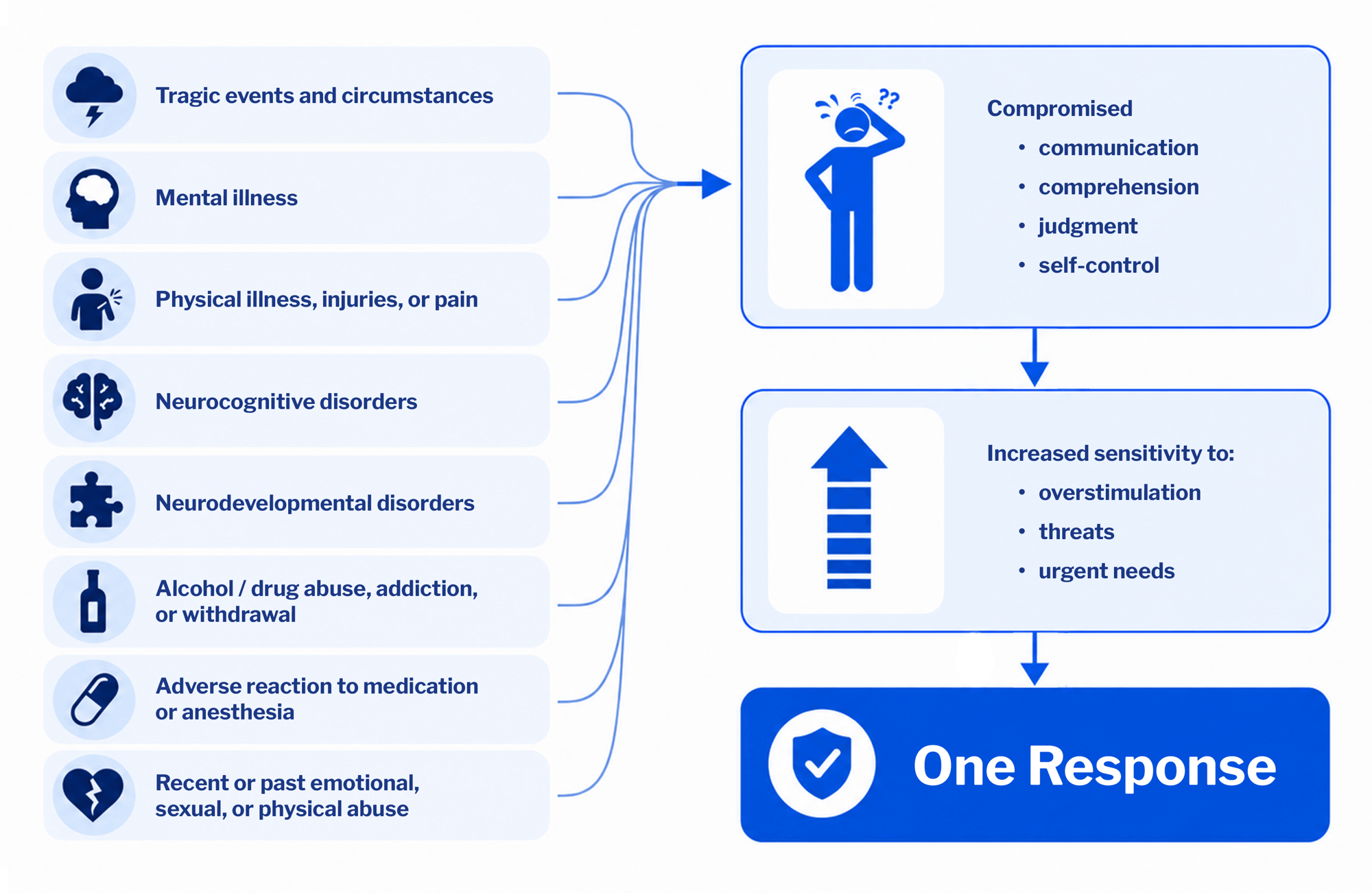
Eight different causes. One thing they all do to a person. One set of skills that works regardless.
Any of these can compromise communication, comprehension, judgment, and self-control, which Vistelar labels as experiencing cognitive challenges. Before and during an incident, there is therefore no need to diagnose a person's specific condition. The skills Vistelar teaches are designed to address the underlying situation: increased sensitivity to overstimulation, to real or perceived threats, and to urgent needs.
This matters both practically and doctrinally. A caregiver who is trying to work out what is wrong with someone is not attending to the person in front of them, and the pause costs time that a deteriorating situation does not have.
The through-line across every cause of cognitive challenge is that the highest-value work happens before the interaction even begins. That is what drives Vistelar's focus on non-escalation.
Structured screening produced the single strongest result in the Cochrane review of organizational interventions, so it deserves more attention than it gets. The problem is that most tools in circulation were validated in psychiatry and are being used in medical-surgical units where they have never been tested, and one commonly recommended instrument is not a screening tool at all.
ABRAT
- Items: 16
- What it does: Predicts aggressive behavior risk
- Validated in: Medical/surgical, ED, geriatrics, long-term care, EMS
- Performance: Sensitivity 71–84%, specificity above 89%, AUC 0.82–0.91
Brøset Violence Checklist
- Items: 6
- What it does: Predicts imminent 24-hour risk of physical violence
- Validated in: Acute inpatient psychiatry; increasingly used in ED and med-surg settings
- Performance: Sensitivity 45.7–88.6%, specificity 80–100%, AUC 0.69–0.98
DASA
- Items: 7
- What it does: Predicts imminent risk
- Validated in: Psychiatric and forensic settings only
- Performance: Sensitivity 23–87%, specificity 42–96%, AUC 0.59–0.92
BRACHA
- Items: 16
- What it does: Assesses aggression risk in children and adolescents
- Validated in: Pediatric psychiatry, ED and inpatient settings
- Performance: AUC 0.75 for any aggression; 0.82 for aggression toward others
STAMP
- Items: 5 domains
- What it does: Observational framework
- Validated in: One Australian ED; qualitatively derived
- Performance: No published sensitivity, specificity or AUC
Overt Aggression Scale
- Items: 4 categories
- What it does: Measures aggressive events that have already occurred
- Validated in: Inpatient psychiatry
- Performance: A measurement scale, not a predictive tool
Three practical conclusions. ABRAT has the best validation outside psychiatry, and a 2025 umbrella review describes it as the only tool identified for those environments in the available review literature. The Brøset checklist is the most widely used, with a 24-hour window and cutoffs that translate into action. And the Overt Aggression Scale should not appear in a screening protocol, because it measures aggression that has already happened rather than predicting risk.
The umbrella review's own conclusion is worth carrying into any procurement conversation: "No singular WPV risk assessment tool has been shown to be completely efficacious in all healthcare settings."

The most common design error in healthcare workplace violence training is putting everyone in the same tier regardless of risk.
Risk-Stratified Training Tiers
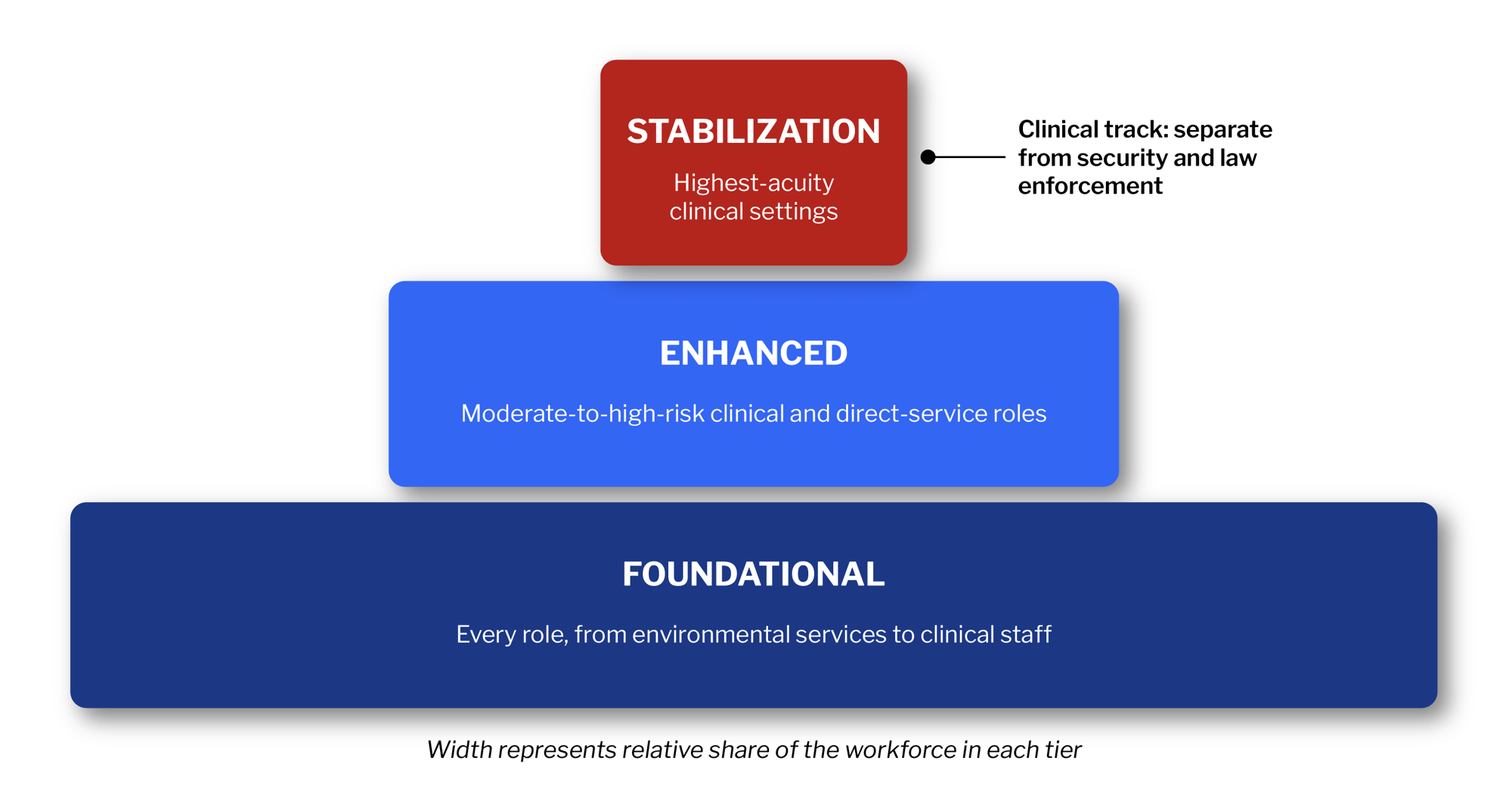
Most of your workforce needs the base. Very few need the top. Training everyone the same way wastes both.
|
Tier |
Who |
Scope |
|
Foundational, all staff |
Every role, from environmental services to clinical staff |
Shared framework and vocabulary, the non-escalation phases, recognition of pre-violence behavior, and how to get help |
|
Enhanced, moderate to high-risk clinical and direct-service roles |
Inpatient units, ambulatory clinical staff, front desk and registration |
The de-escalation phases, team response, communicating under pressure |
|
Stabilization, highest-acuity clinical settings |
ED, inpatient behavioral health, psychiatric emergency, critical care |
Structured physical response, but separate from the security and law enforcement track |
Two notes on the Foundational tier. It should be genuinely universal, because the person who first meets a frustrated visitor is usually not clinical. It is whoever is at the desk. And it is where the return is highest, because prevention capability reduces the number of events rather than improving performance during them.
What implementation actually takes
In the rollouts I have run, the highest-risk units, meaning the ED, behavioral health, and critical care, are usually the best place to start.
Sequencing matters more than speed. Train the highest-acuity units first, because that is where the incidents are, and start measuring immediately.
And protect the practice time. Both academic research and our own research and experience provide clear evidence of the importance of scenario-based practice in developing permanent changes in employee behavior.

Every intervention with strong published evidence combined instruction with practice.
A training completion percentage is a compliance metric, not a safety metric. It tells you a module was opened or attendance occurred.
Organizations that get durable value watch leading indicators alongside lagging ones.
Leading Against Lagging
Leading
Tells you what is happening
-
Near-miss reporting
-
Security-assist-to-incident ratio
-
Risk screening completion
-
Staff confidence
-
Debrief participation
Lagging
Tells you what happened (Most programs only watch this)
-
Workers' compensation claims
-
Days away or restricted
-
incident acuity
-
safety-related turnover
If you need help translating those into a number leadership will act on, start with what conflict is actually costing you.
The one indicator worth watching most
The single most useful leading indicator is the security-assist-to-incident ratio: how often security is called to assist, relative to how often an assist call results in a violent incident. Roughly five assists per incident suggests a culture where staff asks early, and help arrives before things escalate. A ratio near 1:1 suggests that security only gets involved once the situation has already become what it was meant to prevent.
Expect reported incidents to rise before they fall
Reported incidents usually rise after a program launches. This is not the program failing. Cochrane's reviewers observed exactly this, noting that training did not reduce aggressive incidents and may have increased reporting instead. Staff who finally have a framework and permission report what they used to absorb.
Consider the room available: in a 2026 survey of nurses, only 54% of those who experienced an incident reported it formally, 40% of those who did saw no action taken, and 9% felt supported by leadership. In my experience, the reduction in actual incidents follows the reporting increase within a reporting cycle or two.
Decide before launch that a rising reported-incident count in month three is a success signal, and tell your leadership so in advance. Otherwise, the first quarterly report reads like a failure at exactly the moment the program is starting to work.
What an article can and cannot do
I have deliberately not taught the methods named in this piece.
An article can hand you a framework, a vocabulary, and a set of reasons. It can tell you that much of the escalation in a hospital is manufactured by the responder rather than the patient, that repetition escalates, that severity arrives without announcing itself, and that a person in crisis often cannot reason their way to calm. Those things change how you think, and thinking differently is not nothing.
What an article cannot do is stand next to you while you try it. It cannot watch how your words land on a frightened patient, correct your distance and your tone while it still matters, or run the repetition over weeks that turns something you know into something you do without deciding to.
We have evidence for that, and it is our own. In the MCBHD evaluation, staff were still using the skills two years later, and the measured gain in skill had faded anyway. Knowledge decays even when the intention to use it does not. Practiced and sustained capability is a different thing, and it does not decay the same way.
So this article gives you knowledge. Skill and ability take practice. That is not a wall we built around the content. It is what our own research found.
The bottom line
Almost every healthcare workplace violence program is designed to help staff perform well in the worst moments. That is an understandable place to put the money. It is also, on the evidence, the hardest thing to improve and the least likely to move an incident rate.
"The alternative is not better performance in the worst moment. It is fewer worst moments."
That is what non-escalation is for, and most of it is unglamorous. Preparing before you walk in. Responder behavior that stops manufacturing escalation. Fixing the operational failures that reliably produce aggression: the unmanaged pain, the unexplained wait, the unanswered question, the small indignity nobody logged. Practice instead of content. And measurement from the first month, so you know what your own program does rather than what the literature says programs do in general.
If your program stops at de-escalation, the next step is not a bigger training budget. It is an honest look at the ninety seconds before de-escalation is needed, and whether anyone on your staff has ever been prepared for them.

Frequently Asked Questions
What is the difference between non-escalation and de-escalation in healthcare?
Non-escalation prevents a situation from reaching the point of conflict: preparation before an interaction, recognition of pre-violence behavior, how an interaction is opened, and how it is closed. De-escalation is what you use once tension has surfaced to reduce intensity and return the interaction to a calmer state. In Vistelar's 6 C's of Conflict Management, non-escalation is the three phases present in every interaction, and de-escalation is the three phases an interaction can escalate into.
What are the 6 C's of Conflict Management?
Context, Contact, Conflict, Crisis, Critical and Closure. Context, Contact, and Closure describe every interaction: preparation, engagement, and how it ends. Conflict, Crisis, and Critical describe what an interaction can escalate into: refusal and anger, an inability to cope, and physical harm. The escalation phases are not sequential. An interaction can reach any of them directly.
Does de-escalation training actually reduce workplace violence?
The evidence is weaker than the industry implies. A 2020 Cochrane review of nine controlled studies found education combined with training may not reduce aggression toward healthcare workers, at low to very low certainty, though it may improve knowledge and attitudes. RAND reached a similar conclusion in 2019 and found a comprehensive approach may be more effective than de-escalation training alone. The evidence supports teaching that combines instruction with role-play or simulation, and programs that pair training with a focus on organization-wide culture change.
Has Vistelar's program been independently evaluated?
Yes. Researchers at the University of Wisconsin–Milwaukee evaluated the program at Milwaukee County Behavioral Health Division. MCBHD commissioned and funded the evaluation. Researchers surveyed staff before training and at one month, one year, and two years, with focus groups alongside. Vistelar did not commission the study, conduct it, or control its findings. The results were published, peer-reviewed, in the International Journal of Conflict Management in 2022, and the underlying technical reports are publicly available.
The finding that mattered most to us was that the initial measured gain in conflict management skills faded over time even though staff kept using the skills, which is the reason Vistelar moved from a train-the-trainer model to content licensing with a focus on sustainment. The evaluation had no control group and relied on self-reporting, and its full findings, favorable and unfavorable, are in the published reports.
Why does de-escalation sometimes fail with a patient in crisis?
Because most de-escalation models depend on the patient being able to engage verbally, and a person in crisis often cannot. Project BETA, the consensus statement behind most de-escalation curricula, acknowledges that some patients cannot be effectively engaged and verbally de-escalated, and it provides no condition-specific modification. Vistelar's position is that the cause does not change the response. Many things can compromise someone's communication, comprehension, judgment, and self-control, and the skills that work address that underlying sensitivity rather than the diagnosis behind it.
Which healthcare staff need physical intervention training?
Clinical staff in the highest-acuity settings: emergency department nurses, inpatient behavioral health technicians, psychiatric emergency staff. They need a curriculum built for non-security clinical roles. Security officers and law enforcement professionals need a separate track, because their legal authority, equipment, and intervention threshold differ. All physical intervention in a hospital operates inside CMS and Joint Commission restraint and seclusion requirements.
Which violence risk assessment tool should a general hospital use?
ABRAT has the best validation outside psychiatry, with sensitivity of 71 to 84%, specificity above 89% and AUC between 0.82 and 0.91 across medical-surgical, ED, geriatric, and long-term care settings. The Brøset Violence Checklist is the most widely used and offers a practical 24-hour window. Do not use the Overt Aggression Scale as a screening tool, because it measures aggression that has already happened rather than predicting risk.
How do you measure whether conflict management training is working?
Track leading indicators such as near-miss reporting, the security-assist-to-incident ratio, risk screening completion, and staff confidence, alongside lagging indicators such as workers' compensation claims, days away or restricted, incident acuity, and safety-related turnover. Expect reported incidents to rise before they fall, because a workforce with a framework reports what it used to absorb. Decide in advance that this is a success signal and tell leadership before launch.
Sources
Prevalence and impact
Bureau of Labor Statistics, Workplace Violence 2021–2022 (October 2024).
National Nurses United, The State of Workplace Violence in Health Care in 2025–2026 (June 2026; 1,267 registered nurses).
American College of Emergency Physicians member poll, 2022 (n=2,712).
Press Ganey analysis of National Database of Nursing Quality Indicators data.
McGuire SS, et al. "The Team Is Not Okay: Violence in Emergency Departments Across Disciplines in a Health System." West J Emerg Med. 2023;24(2):169–177.
Nurse.org 2026 nursing survey (n=2,090; self-selected online sample).
American Hospital Association and Harborview Injury Prevention & Research Center, The Burden of Violence to U.S. Hospitals (March 2025).
Evidence base
Leach B, et al. Reviewing the Evidence Base for De-escalation Training: A Rapid Evidence Assessment. RAND, 2019, RR-3148-NHS.
Geoffrion S, et al. Cochrane Database Syst Rev. 2020;9:CD011860.
Spelten E, et al. Cochrane Database Syst Rev. 2020;4:CD012662.
Arnetz JE, et al. J Occup Environ Med. 2017;59(1):18–27.
Jameyfield EL, et al. "Best practices for teaching verbal de-escalation in health professions education: a systematic review." Academic Medicine. 2026;101(7):869–881.
Spencer C, Schoenbeck R, DeSanto K. "Tools to predict imminent risk of patient perpetrated workplace violence in healthcare settings: an umbrella review." BMC Public Health. 2025;25:4316.
Richmond JS, et al. "Verbal de-escalation of the agitated patient: Project BETA De-escalation Workgroup consensus statement." West J Emerg Med. 2012;13(1):17–25.
Evaluation of the Vistelar program
- Freiburger T, Romain Dagenhardt D. "An Evaluation of the Vistelar Training Initiative at Milwaukee County Behavioral Health Division: Final Agency Records Report." Department of Criminal Justice and Criminology, University of Wisconsin–Milwaukee.
- Freiburger T, Romain Dagenhardt D. "An Evaluation of the Vistelar Training Initiative at Milwaukee County Behavioral Health Division: Final Survey Report." Department of Criminal Justice and Criminology, University of Wisconsin–Milwaukee.
- Romain Dagenhardt D, Heideman A, Knoche V, Freiburger T. "An evaluation of a de-escalation conflict management training in a behavioral health hospital setting." International Journal of Conflict Management. 2022;33(1):84–110.
Framework and regulatory
NIOSH, Workplace Violence Prevention for Nurses, Unit 1; OSHA enforcement directive CPL 02-01-058.
CMS Conditions of Participation, 42 CFR 482.13(e)–(f), restraint and seclusion.
Vistelar Unified Conflict Management System, 6 C's of Conflict Management (© 2025 Vistelar, LLC).
Related Content from Vistelar
De-Escalation vs. Non-Escalation: Understanding the Critical Difference
Red Flags: Spotting Antecedents to Prevent Workplace Violence
Situational Awareness Skills Every Healthcare Worker Needs
Why Saying "Calm Down" Never Works
Trauma-Informed Care: Approaching Sensitive Patient Interactions
How Leading Hospitals Measure the Success of Their De-Escalation Programs
Ready for a Better Approach?
Healthcare systems across the country are rethinking how they approach workplace violence prevention training.
If you're exploring options for improving safety and training consistency across your organization, Vistelar can help.